Unmanned Aerial Vehicles (UAVs) or drones have proven their transformative potential on the modern battlefield, especially highlighted in recent conflicts like the war in Ukraine. These small, expendable systems are altering the future of air operations, offering decisive impact potential when deployed en masse. They pose significant challenges to existing air defense systems, necessitating a rethink and innovative upgrades in our defense capabilities. This article delves into the integration of air defense and Counter-Unmanned Aircraft Systems (C-UAS), exploring the evolution of air operations, the emerging threats, and the strategic solutions to safeguard our skies against these novel challenges.
Using unmanned aerial vehicles (UAVs) or drones is not new. Still, recent conflicts, especially the war in Ukraine, have highlighted how the future of air operations is likely to change when aerial activity is conducted almost exclusively remotely. Small, expendable systems, deployed en masse, can have a decisive impact on the battlefield—identifying, disrupting, and even destroying military assets and armored formations on the battlefield and engaging reserves at the rear areas. Drones also aim to destroy critical or high-value targets, such as vulnerable ammunition fuel dumps, hitting logistic centers, or interdicting resupply convoys. The role of air defenses is to prevent the enemy from using airspace, but air defenses were not designed to face such perils.
Moreover, using large formations of drones in well-coordinated attacks poses an extremely difficult challenge to defend against. Improving the capability to engage drone threats requires significant changes in existing air defenses. These include the introduction of new sensors, and integration of a theater-wide and local situational picture, to enable air defenders to understand the enemy moves and prepare as early as possible. Employing decision support systems and using sophisticated electronic-warfare tools, can help face such coordinated attacks and enable the air defenders to manage the inventories of interceptors with carefully planned battle economy, thus avoiding running out of interceptors when facing saturation attacks.
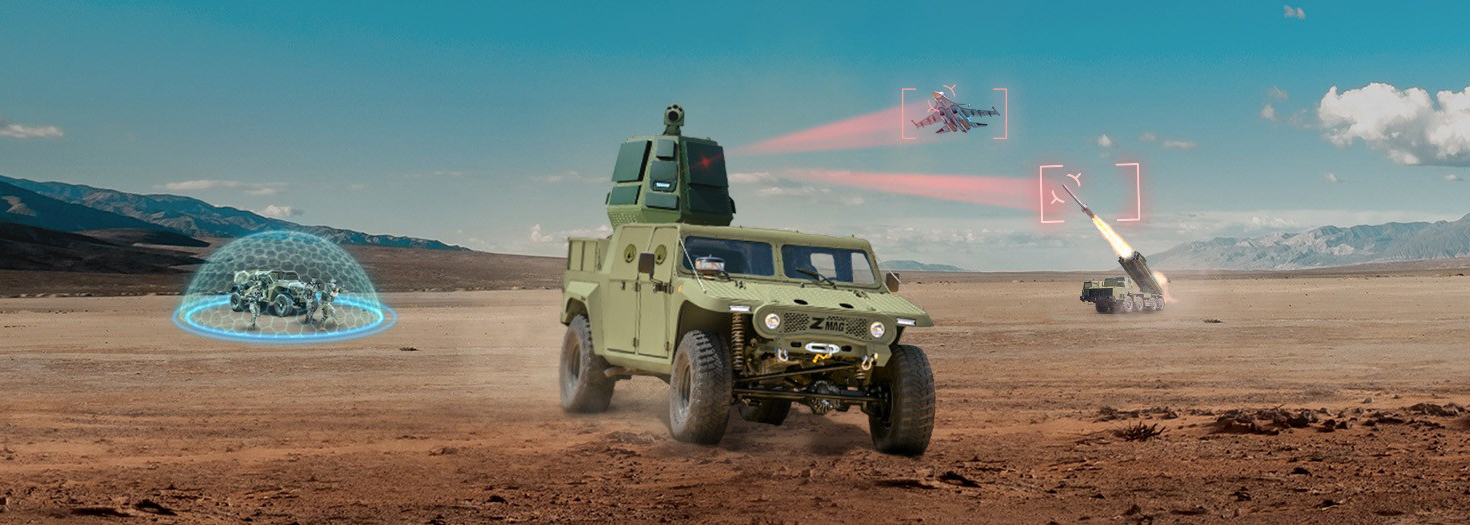
An integrated air defense capable of dealing with all types of targets – from slow drones and unpowered guided bombs to air-breathing manned or unmanned platforms and hypersonic or ballistic rocket-propelled missiles, using a combination of interceptors, directed-energy lasers, electronic countermeasures, and high-powered microwave weapons.
Recent conflicts have highlighted some significant changes and challenges in air defense. Unmanned Aerial Systems (UAS) and loitering weapons have been used extensively and are increasingly becoming part of the aerial threat landscape.
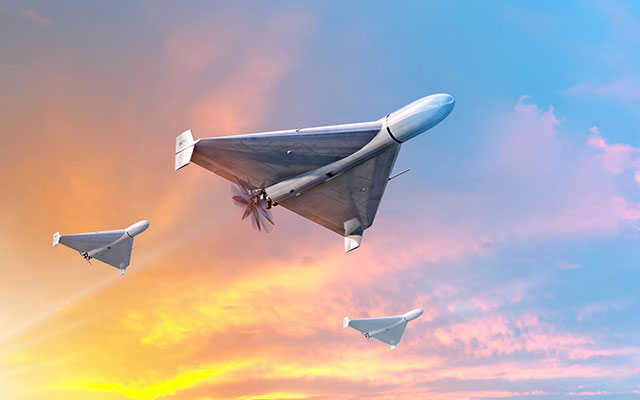
What makes UAS and Loitering Weapons so effective and dangerous? Listed here are some of the arguments:
Large Numbers, Low Cost: UAS and loitering weapons are relatively cheap, easy to produce, and affordable to lose, making them an attractive option for attack planners. To be used as loitering weapons and for saturation attacks, overwhelming a target’s defenses by sheer numbers.
Low Signature: Drones and loitering munitions are small and can fly slowly and at low altitudes, making them hard to detect by radar. UAS, in particular, can be used in swarming tactics, This increases the complexity and difficulty of the defense.
Versatility: Coordinated attacks by UAS, loitering weapons, and missiles challenge air defenses to deal with multiple threats coming in at various altitudes, speeds, and directions. Unlike a big missile designed to destroy the target with a single warhead, a drone swarm uses multiple small drones with coordinated actions to seek and engage the key components to disable their targets and increase the probability of larger missiles penetrating and destroying the target.
Multi-Sensor Systems
Facing the risk of drones and loitering weapons, the need to develop weapons, doctrine, tactics, and training for defeating small UASs and drones is obvious. Part of this process is the fielding of sensors that can effectively detect, track, and engage the full range of threats – drones, aircraft, ballistic, and cruise missiles. The answer to this challenge is using a mix of sensors spanning multiple frequencies and spectral bands, combining passive and active multi-band radar, SIGINT, and electro-optical sensors. These methods are widely used in the short-range Counter-UAS (C-UAS) role, but they should also be considered for the upgrading of air defense systems that, until now, have relied mostly on radars.
Combining Active and Passive Sensors
Integrating passive sensors provides an important advantage and resilience to air defense systems in the early warning, threat assessment, and engagement phases. Such systems often integrate Signals Intelligence (SIGINT), Passive Coherent Location (PCL) radars, and ADS-B. These sensors can be co-located with existing radars or separately. An air situation picture solution relying on passive sensors can covertly scan, detect, track, and classify emitters and non-emitting low Radar Cross-section (RCS) targets, even at great distances and in situations where the line of sight is obscured. When potential threats are detected, these passive sensors can cue other systems, such as radars or electro-optical sensors, to track the targets. When radars are degraded or disabled under enemy attack, passive sensors can augment the air defense system and maintain the air situational picture.
Improving Command and Control (C2)
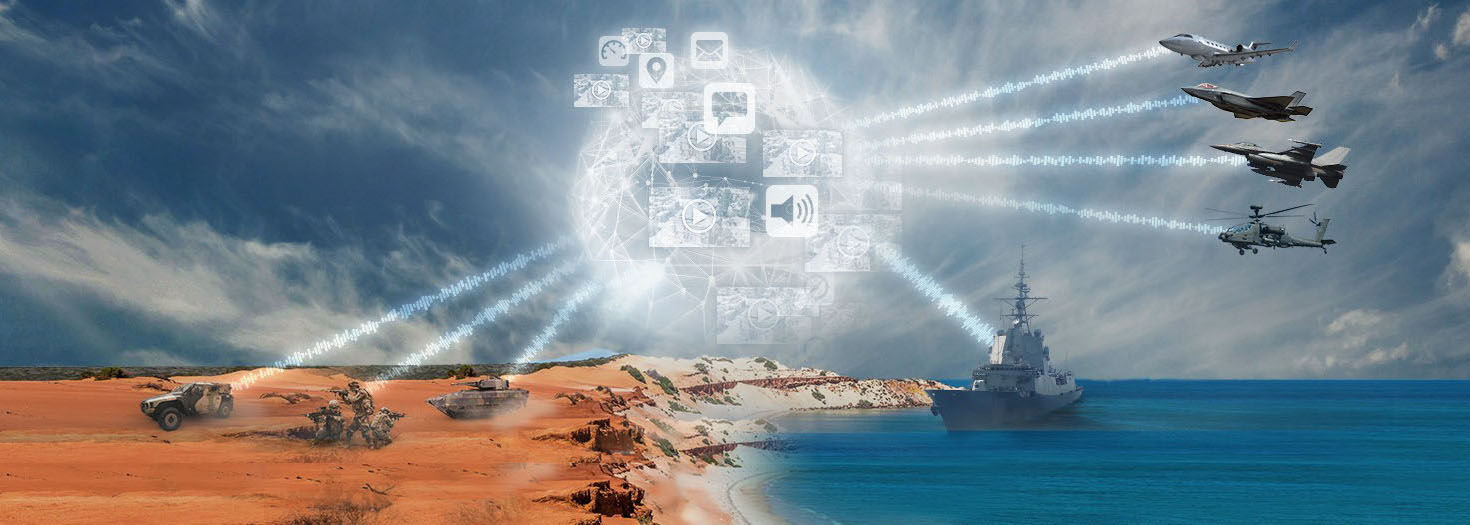
Integrating multiple sensors into a cohesive air picture in real-time is a challenging task that requires advanced sensor fusion to discriminate between closely situated targets, monitor large volumes of airspace, simultaneously track many targets in different heights, ranges, and speeds, and intelligently prioritize threats. To improve the air defense against saturation and swarm attacks, the command and control of air defenses should rely on advanced computing tools to automate and execute defense plans against the most relevant threats, rather than the most visible ones, that are most likely decoys or diversionary threats. These tasks are handled most efficiently by automated processes. From rule-based engines to Artificial Intelligence, Machine Learning (AI/ML), and big-data analytics tools, these methods facilitate automatic, fast, and deep insight analysis, update classification libraries, and identify patterns of anomalies and irregularities that would otherwise remain obscure and untapped.
The ability of passive sensors to classify and identify aerial targets has a direct impact on the performance of air defense, as it can reduce the kill chain processing time for Ground Based Air Defense (GBAD) missions, as quick and unambiguous identification of threats facilitates faster activation of air defense capabilities, creating more opportunities for target interception.
Combining multiple sensor systems, and interceptor types, under a unified open C2 system that can handle the complex situation, prioritize defensive assets, and manage the battle economy of available interceptors to defeat the threat. Passive sensors are essential to maintain an effective situational picture and C2 even under enemy attack.
Summary
The landscape of air defense is amid a significant shift, influenced by the increasing use and sophistication of Unmanned Aerial Systems (UAS) and loitering weapons. These systems, owing to their large numbers, low cost, low signature, and versatility, present a formidable challenge to existing air defenses. To counter these emerging threats, an integrated approach is required that utilizes a range of sensors, advanced command, and control tools, and a diverse array of interceptor types. Passive sensors, particularly, are key to maintaining an effective situational picture and command and control even under enemy attack. By unifying multiple sensor systems and interceptor types under a cohesive C2 system, we can ensure a robust defense against evolving aerial threats. This article analyzes the challenges and the strategic response required to counteract them