Navies worldwide face new missions and challenges that require novel technological capabilities.
The sea has always been a playground for nations using naval power to exert influence. In the past, projecting naval forces to the high seas was sufficient to demonstrate a nation’s military might.
Today, national interests focus on littoral areas and inner seas parallel to blue waters. Navies are called to operate closer to the mainlands, where the battlespace becomes increasingly complicated. The situation exacerbates in arenas where the enemy maintains anti-access and area denial (A2AD) capabilities in the form of long-range air defenses, coastal anti-ship missiles, and sea mines. Such threats are hindering the movement of naval forces and risking merchant shipping, threatening the sea lanes.
A Challenging Arena
Navies must adjust to the continually changing environment and dominate the maritime arena by maintaining complete situational awareness and control of their surroundings. Such dominance covers the sea, air, land, and subsea domains, for the naval force would have no second chance when facing an immediate attack unprepared. To continue and demonstrate sovereignty and presence in the presence of such a threat, naval forces require multi-layered defensive solutions and scalable offensive capabilities to defeat targets in all domains, even in congested and obscure scenarios.
Based on a rich technological heritage, delivering naval combat-proven offensive and defensive weapons, sensors, combat management, and information systems, Israel Aerospace Industries (IAI) have cooperated with the world’s navies, fielding the latest defense solutions keeping naval fleets and coastal security ready for new challenges.
As challenges increasingly become multi-dimensional, information systems become more integrated, enabling system operators and commanders to quickly analyze the situation and take the necessary actions to meet any threat they may face. At the same time, they should avoid any risk to merchant and fishing vessels and any other non-combatant elements the enemy may hide behind.
Maintaining Maritime Domain Awareness
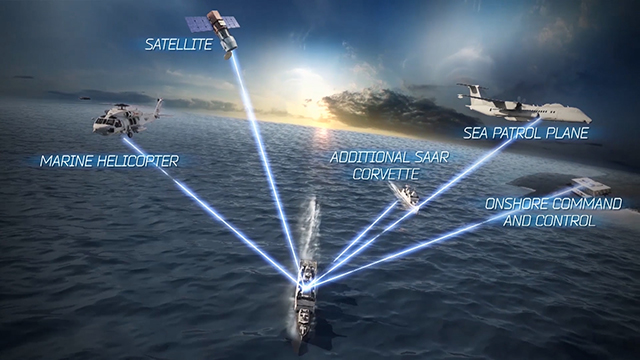
Navies rely on many sensors IAI offers to secure their coastal waters and littorals, even beyond their Economic Exclusion Zone (EEZ). Such systems range from satellites to aerial maritime patrols by aircraft and UAVs to coastal radars, including Over-the-horizon (OTH) and coastal radars, Signal Intelligence (SIGINT), and electro-optical observations. Customers establish maritime domain awareness (MDA) by integrating different assets.
These systems rely on multiple sources of information, from commercial, open sources such as AIS and vessel traffic monitoring, wide-area scanning using space-based synthetic aperture radars (SAR), Over the Horizon (OTH), and surface radar scans, electronic surveillance, communications interception, and tracks by imaging sensors. Instead of operating each sensor individually by employing sensor fusion with artificial intelligence, machine learning (AI/ML), and decision support algorithms, IAI’s MDA information systems streamline the operator’s workflow, thus buying more time for decision-making.
Integrated Combat Suite
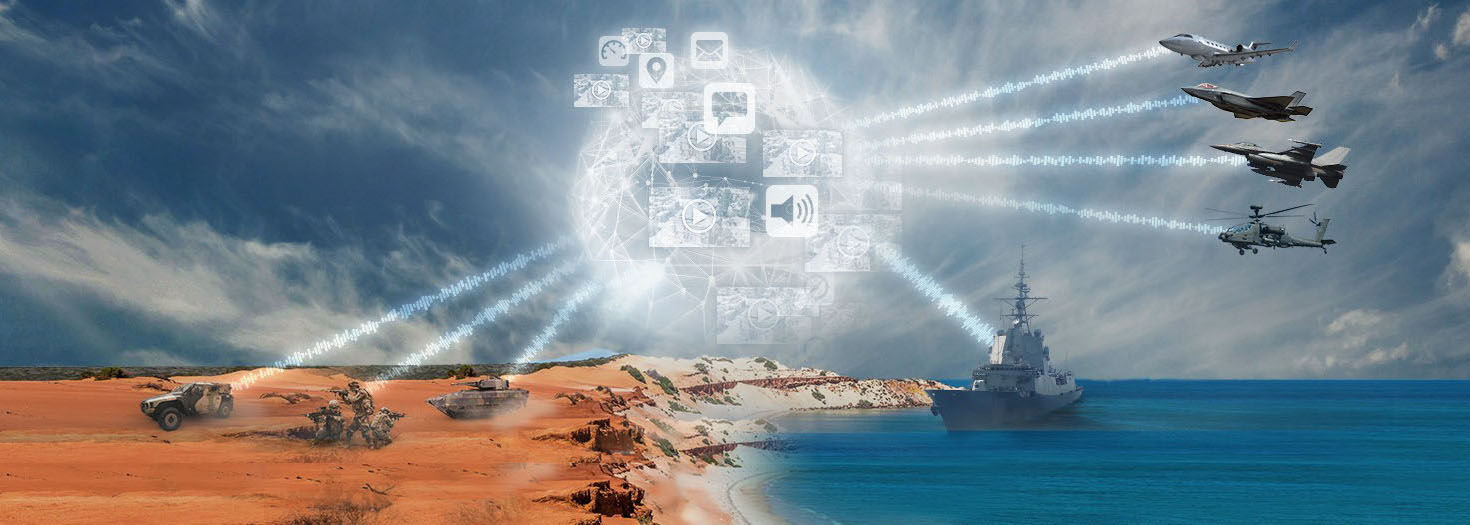
Naval vessels follow a similar path integrating multiple sensors and weapons onboard into a whole system. As a developer of surface-to-air and surface-to-surface weapons, sensors, communications, and information technology (IT), IAI has mastered the Naval Combat Suite for Combat Systems Management and Integration. IAI’s IT integrates net-centric operations capabilities across weapons, platforms, and entire task forces with open systems architecture and unique protocols designed to enable customers’ complete independence in application development and support. IAI offers advanced command, control, communications, and countermeasures (C4) systems for shipborne applications relying on ad hoc (MESH), line-of-sight, and satellite communications, extending the reach of every element of the naval task force over the horizon.
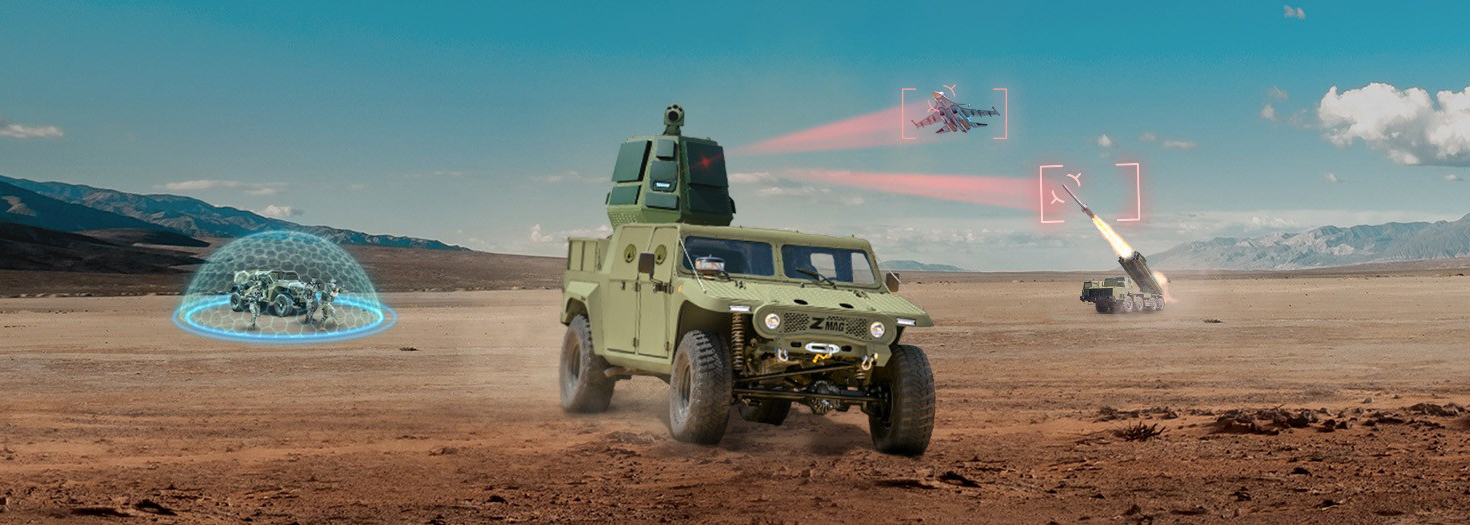
IAI’s Barak MX naval air defense system reflects this capability. Barak MX extends its defensive coverage across the entire task force by employing Area Defense capability that can intercept any jets, aircraft, missiles, and drones at a range of up to 70 km. This area defense capability combines multiple vessels carrying Barak-MX in a task force into an integrated defense network. Users can also network and integrate their offensive weapons on a single ship or across a task force to achieve scalable and optimized effects. These capabilities could include a range of IAI-made weapons, including long-range missiles, loitering weapons, or precision-guided missiles.
Leveraging cutting-edge technologies and innovation and backed by decades of experience developing and fielding integrated naval suites, sensors, and combat systems, IAI has integrated many of its systems into comprehensive and efficient networked solutions. These unique capabilities are not futuristic concepts; they are available today, enabling naval forces to find and decisively defeat the enemy under the most challenging environment.