Addressing the modern combat arena challenges requires a shift from platform-centric warfare to a real-time network-centric approach.
Gone are the days when war entailed two armies facing each other on the battlefield, engaging in hand-to-hand combat. Modern warfare fought with high-tech weapons in multiple arenas – land, sea, and air – is a complicated business characterized by asymmetric forces, the deployment of various entities, and the need for them to work together seamlessly, each from their unique vantage point. This requires real-time data sharing to generate timely operational insights that enable effective, safe joint mission performance, control, and management.
With over 20 years of proven operations, IAI’s Operational Avionics Layer (OPAL) has continuously evolved to provide a highly-scalable solution to these needs in the form of a robust decentralized networking cloud. Providing the necessary interoperability between forces and across different platform generations, OPAL ensures that all relevant personnel are constantly aware of missions, friendly forces, targets, and threats, even if they cannot perceive them via their sensors. Here’s how it does it…
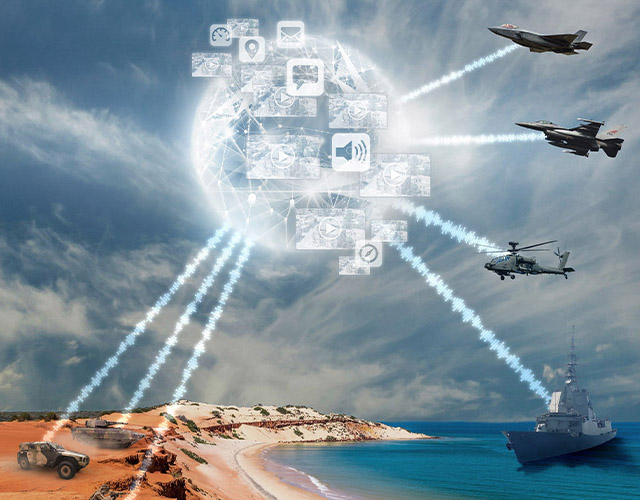
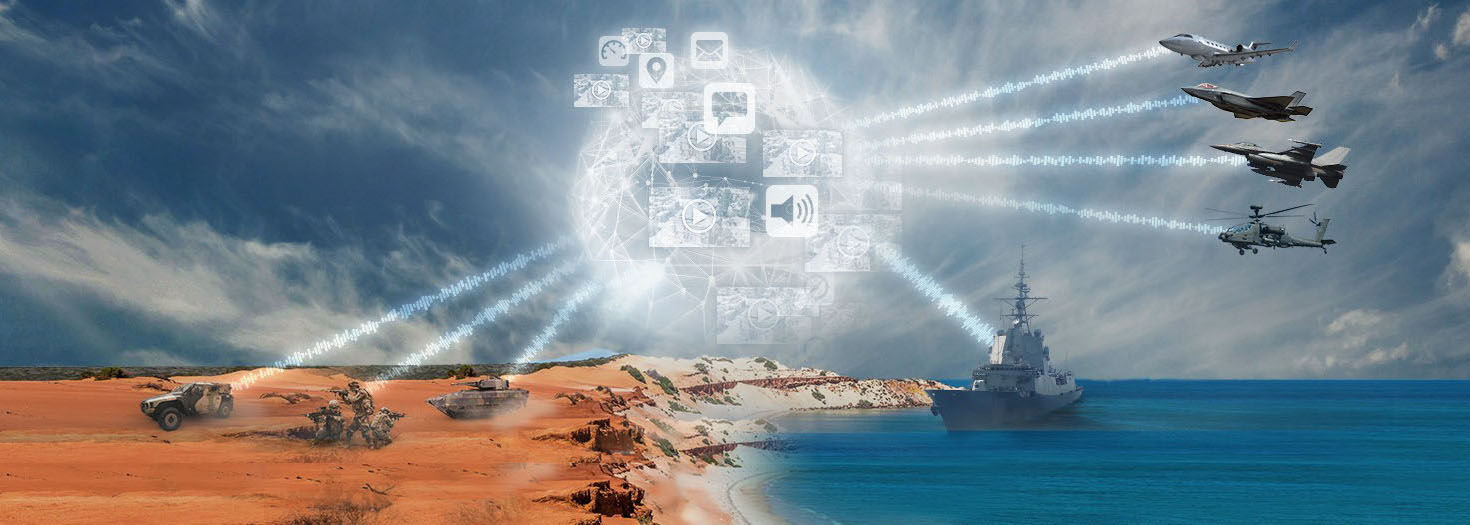
• Enhanced situational awareness: One of the key obstacles to interoperability is the challenge of achieving common situational awareness across different forces. Consider this simple example: a soldier sees a threat in the second window of the third building to his left. He uses this perspective to describe the situation of the attack helicopter that will neutralize the threat. The pilot must then interpret the message according to his point of view – a subjective process, vulnerable to human error. By enabling the sharing of a location, or a video image of the scene, OPAL provides a common and objective operating picture to ground, naval, and land forces, enhancing situation awareness and facilitating interoperability.
• Ad-hoc network: Speed and agility are crucial to gaining a tactical advantage in battle. Unlike other systems, OPAL requires no preplanning for stakeholders to communicate. The ad-hoc distributed cloud enables real-time data generated by both onboard platform sensors and stationary communication stations to be instantly distributed and shared among different network members, so they can take the necessary action to achieve maximum operational efficiency.
• Networking resiliency and security: OPAL-enabled platforms form a highly robust, resilient, and secure decentralized cloud which extends over various maneuverable and static forces – airborne, naval, and ground. Each network member becomes a highly-advanced communication node that can route and relay messages securely to other members in a self-forming, self-healing network. If one node fails, the other nodes automatically re-route the message to its destination.
• Real-time communication: When avoiding collision or projectile attack, 8-10 seconds is too long for an airborne entity to wait to receive critical information. When time is of the essence, OPAL’s incredibly high speed and refresh rate ensures minimal delays and instant response.
• Radio and datalink flexibility: A knock-on advantage of OPAL as a decentralized cloud network that can support any type of radio, including legacy and software-defined, is that the end-user is not locked into any specific vendor. As military projects tend to run over several years, this gives the operator the flexibility to start with the radio technology offering the best value at that time, and then gradually migrate to better, newer technology as it becomes available.
• Unified communications layer: The current trend to use multiple communications solutions, each tailored to meet the needs of specific projects, users, or platforms, results in data silos that prevent interoperability. Implementing OPAL as an overarching, unified layer of communications across naval, air, and land forces ensures that all relevant parties can access the available data and see the same operational picture.
• Data fusion for optimized information display: OPAL includes an advanced data fusion engine that helps the pilot to extract relevant data from numerous systems to reduce display clutter and improve mission efficiency. So, for example, if a specific target is displayed both within the electronic warfare system and on the platform radar, it will be consolidated into one target via OPAL’s advanced and customizable logic. Any underlying radio solution may be used to establish the physical data link, with OPAL reliably serving as the hub between different communications technologies.
• Quick introduction of operational capabilities: The unified infrastructure that OPAL provides across different platforms also provides the agility and flexibility to enable additional operational capabilities to be introduced as the need arises, relatively quickly and without incurring prohibitive costs. Based on open architecture software, OPAL enables this to be achieved independently of the platform OEM and without the comprehensive end-to-end testing usually required.
This brief analysis illustrates how OPAL enables the three key elements required for true interoperability: connectivity, data sharing, and taking action. This groundbreaking solution delivers increased operational efficiency and lethality – more missions are enabled per timeframe, and the use of available resources is optimized; improved survivability and mission safety – threat awareness is enhanced and exposure time is reduced; and time and cost savings – development and implementation time are reduced, while flexibility and agility are increased.