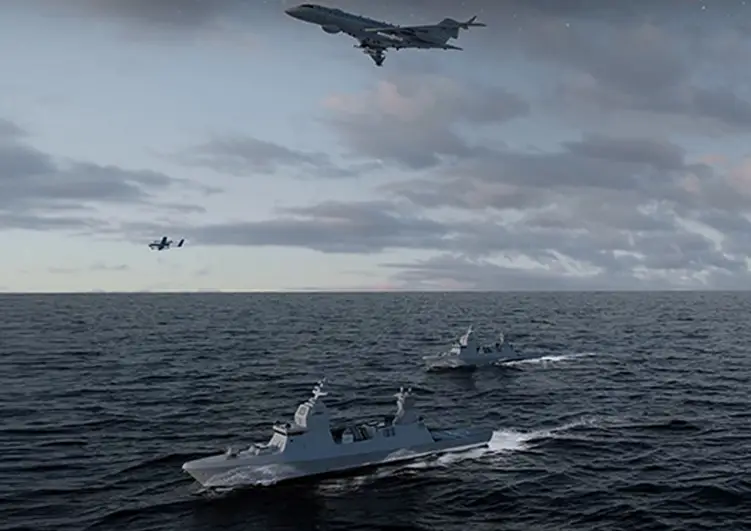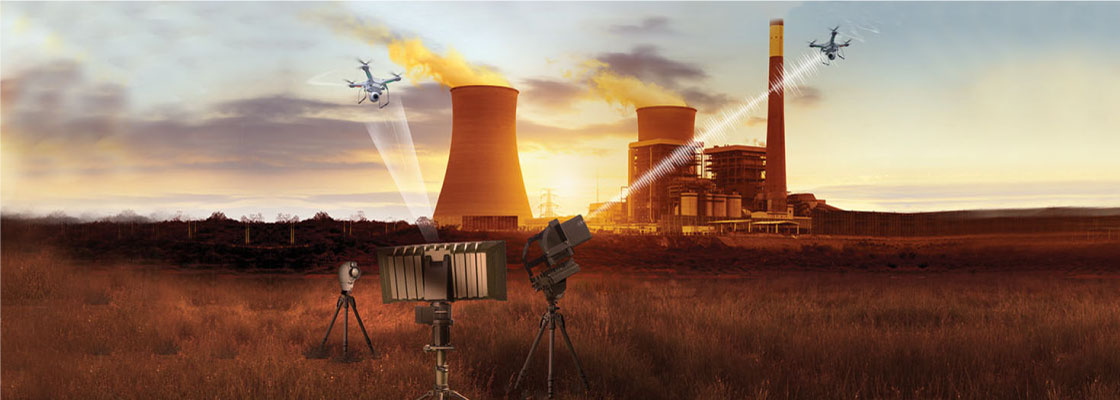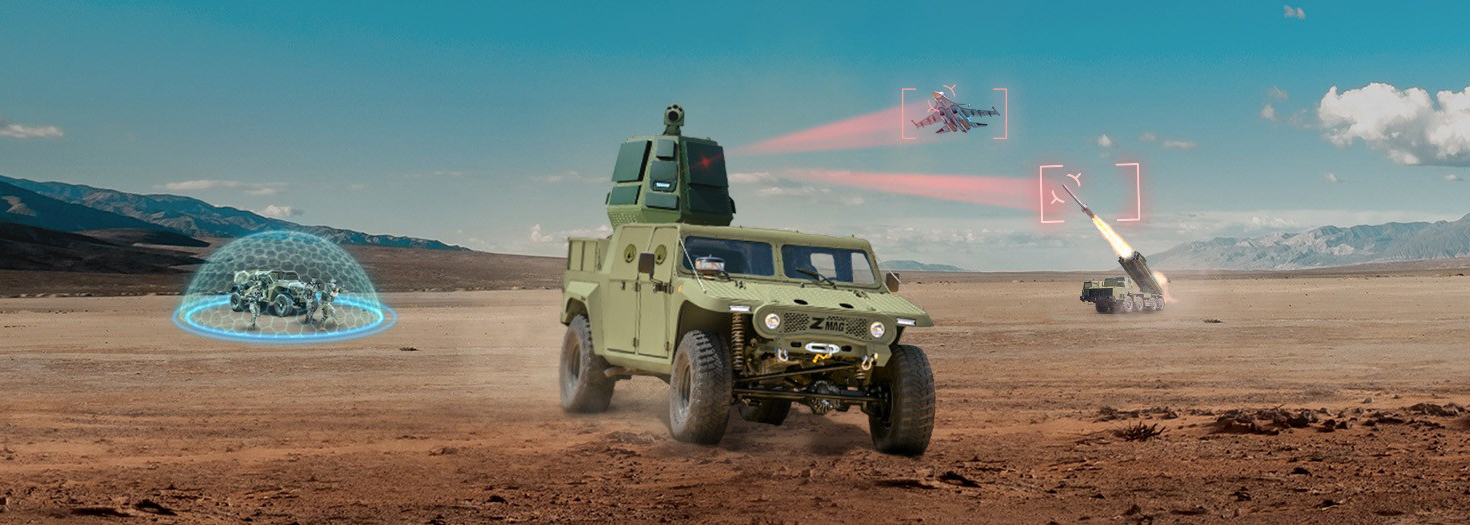
IAI’s OPAL Network-Centric Warfare solution enables platforms and users to share data and information in real-time
With military users moving toward Advanced Battle Management System (ABMS) capabilities leveraging Network Centric Warfare (NCW) and Multi-Domain Operations, the connectivity between platforms and networks becomes a critical enabler in the success of such initiatives.
Through this seamless connectivity, applications onboard and on the network can access data and information anywhere and all the time. By linking to the avionic data bus, they fuse data sent by the platform’s sensors and displays, feeding information to the crew and mission systems onboard and the communications connecting the platform to others.
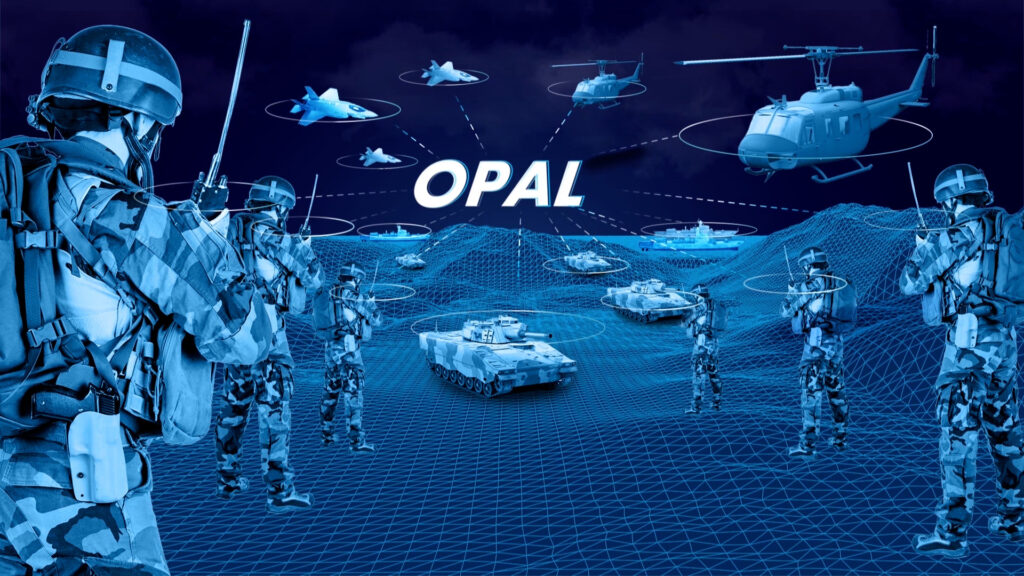
Applications of OPAL
An inherent communication network utilizes a self-forming, self-healing MANET to enable real-time information transfer between nodes. Such a network allows users to exchange data between connected platforms, which were never designed to exchange such information. Implementing security barriers and buffers enables access to information anywhere while ensuring uncompromised information flow and security.
Radio designers can leverage an Application Programming Interface (API) to enable their radios to adapt to systems and platforms networked by different systems. Such API facilitates the integration of Software Defined Radios (SDR) and waveforms of different makers. In this process, they utilize evolving standards representing a new approach for modular and open avionic architecture, such as the Integrated Modular Avionics (IMA) and Future Airborne Capable Environment (FACE) network-centric architecture. FACE enables manufacturers, users, and developers to share and reuse applications, thus saving development time and cost. IMA defines a standard hardware infrastructure that allows different vendors to integrate with the customer’s solution of choice. Relying on IMA and FACE, such systems offer customers complete independence in developing new capabilities over the generic infrastructure, which couldn’t be done with traditional avionics.
When used as an integrated part of a networked system, the ad-hoc MANET network established among different nodes is extended by switching to other networking channels available onboard, thus expanding the reach of MANET beyond the line of sight. Unlike traditional datalinks that need preset communications configurations that are cumbersome and difficult to change on the mission, a modern NCW system uses self-forming techniques and dynamic self-healing topologies to overcome topology changes. For example, encountering interference, or jamming, performing sharp maneuvers, or as an aircraft runs out of fuel and has to leave formation.
Prioritizing each packet’s delivery by implementing application-specific dynamic Quality of Service (QoS) such a system ensures all users receive the bandwidth they require at the location and time of need, per the required operational capability. This is a critical feature for airborne networking, where maneuvering platforms continuously change position and attitude, resulting in downgraded communications links.
This feature enables the system to deliver the information to the user anytime. Whether the information resides on a slow, high-flying UAS, fast, low-flying strike jet, or stored at the air forces’ intelligence hub, all data is accessible in real-time through a decentralized cloud.
Fast and Secure Integration
Digital communications improve airborne data transfer coherence, reduce error rates over given power and range requirements, and enable the direct interface between remote and onboard information systems. Empowered by a modern human-machine interface, data is transformed into more intuitive situational displays with visual, audible, and spatial warnings, indications, and instructions, thus reducing the user’s cognitive load and improving mission success. For example, once a member joins the network, its sensor data is uplinked and shared with the relevant members per the mission, enabling other aircraft or air defense elements to see all targets.
By integrating and correlating data from multiple sensors on- and off-board, the decentralized cloud NCW solution fuses all that data, analyzes the situation, filters errors, and recommends a course of action to the user, thus minimizing workload.
Such an NCW solution can also provide critical flight safety services for users in training and operational missions. By watching every platform’s position relative to all others and calculating dangerous proximity paths, such capabilities can predict potential collisions and trigger alerts warning the pilots at risk, with visual and audible instructions for a safe breakaway.
Another capability is operationalized now by a leading air force to implement flight training by introducing virtual munitions on board, enabling the user to practice using munitions without carrying and launching a dummy missile or dropping a training bomb.
Such connected applications also support air Combat Training. Embedded with each user, every participant may create and experience the effects of an opponent’s action in real-time, including long-range threats and opponents beyond the user’s sensor visibility, extending the training to an entire campaign level using virtual and live entities.
With ubiquitous access to information, the decentralized NCW solution can achieve new capabilities through adaptive data fusion. With a vision to establish a ‘universal language’ across the network, all users throughout the levels of command and all friendly forces would share a common picture of the battlespace in real time. This new capability enables every user to see beyond the range of their sensors as they share relevant information obtained by other group members. Command and control elements will look beyond the horizon, as the same network would deliver the information to establish a broader situational map shared by all command levels.
IAI’s OPAL Network-Centric Warfare solution, which has been operational since the mid-2000s, implements such connectivity today, enabling platforms and users to share data and information in real time. OPAL empowers users to implement futuristic network-centric concepts today, available in different form factors and matching user requirements and operational needs from airborne and naval domains to man-portable systems.