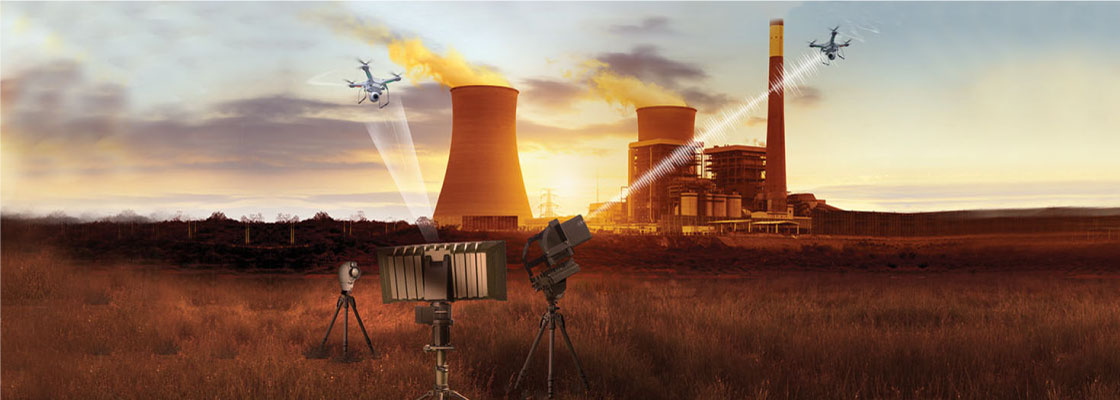
BARAK MX Empowers the New Generation of Air Defenders
Adapting to the rapidly changing challenges of modern air warfare, air defense systems leverage open architecture, modular design, and software-based agility to transform into agile and advanced network-centric Integrated Air Defense Systems (IADS).
Legacy air defenses built in the 1990s and early 2000 were bound to rigid and hierarchical formations and centralized command and control to achieve their mission. The proliferation of such weapons creates an operational paradigm shift in the threat. For legacy systems designed to defeat aircraft, meeting such capabilities requires massive investment in new strategies and expensive hardware upgrades. To remain effective and potent, the IADS must maintain its effectiveness against electronic attacks and suppression.
Modern IADS such as the BARAK MX are required to flexibly deploy and provide optimized coverage against all known threats, whether fixed-wing or rotary-wing manned aircraft, unmanned aircraft, ballistic, cruise, and anti-ship missiles, and loitering weapons. Modern IADS are integrated via networks, allowing for seamless data sharing, limited only by commanders’ decisions to delegate roles, responsibilities, and decision-making. By delegating defensive actions to different elements distributed throughout the defended area, the networked IADS can simultaneously execute multiple kill chains, thus mitigating uncertainties in battle. Moreover, the networked systems can easily delegate tasks for complex threat mitigation, thus overcoming the destruction or isolation of particular nodes.
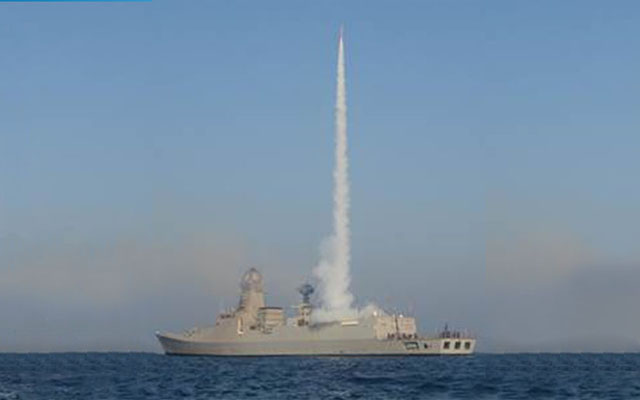
Multi-Layered Network-Enabled
IAI offers the BARAK MX system as a modern IADS and as part of multi-layered air and missile defense system. The system relies on the network-enabled architecture, featuring centralized battle management and independent operation, utilizing the smart-launcher concept. As such, the networked, modular, and customizable BARAK-MX fire unit can be linked to a central battle management node, operate as a classic battery Fire Unit (FU), or act in a stand-alone mode. It can also merge those modes of operation into a hybrid model.
The fire unit (FU) design reflects the system’s agility. The land-based system consists of a smart launcher that operates similarly to the naval vertical launcher. The unit can load a mix of BARAK interceptors – The Medium Range Air Defense Missile (BARAK MRAD), effective up to 35 km; the Long-Range variant (BARAK LRAD), effective at up to 70 km; and the BARAK ER, effective up to 150 km and with additional anti-ballistic missile capabilities. The three missiles maintain a high level of commonality, differing from each other only in elements related to the specific performance of each variant. The Battle Management System (BMS) of the Barak system or those supplied by the customer manages all smart launchers and interceptors associated with the system, whether local or remote, thus achieving the highest success rate while maintaining the most efficient battle economy.
Network-Centric operation enables each node to generate and share a situational picture, receive target allocations and tracks from the battle management center, and perform intercepts in a network-centric operation. The battle manager processes and synthesizes the sky picture and early warnings by fusing all available sensors. This common picture is constantly updated and distributed to each node. When threats are detected, the battle manager allocates targets to each fire unit to pursue. According to operational plans and battle economy, engagement relies on tracks from local sensors or tracks obtained from remote sources. This coordination ensures optimal use of interceptors, eliminates ‘double booking’ of targets, and ensures all fire units remain loaded to continue the mission. The battle manager function can be distributed and reallocated to different elements as the situation requires.
BARAK MX leverage radars developed by ELTA Systems, including the land-based ELM-2084 MMR, the naval, or other radars. However, to better integrate with existing air defense systems, IAI has streamlined connections with command and control and radar systems the user provides. The ability to fuse sensors and interceptors into a single system lies at the heart of Barak MX architecture and is a significant element in its attractiveness to clients. As a modular, software-configurable system, Barak MX can be upgraded and enhanced to cover more options through software changes, enabling customers to tailor the plan to meet different challenges.
Such a layout enables air defenders to face attacks from different directions, heights, and trajectories, posing a complex multi-dimensional Anti-Access Area Denial (A2AD) defense capability.
As reflected by current tenders issued by advanced militaries, net-centric IADS systems are becoming the go-to concept, as they provide the highest operational advantage and cost and benefit, becoming a profound safeguard against evolving threats. But nations are not satisfied with owning such systems; they want to become sovereign in this critical capability. Since BARAK MX was designed entirely by IAI, the company shares sensitive technology with its partners within the guidelines of Israel’s defense systems export regulation but without restrictions from third parties. Under this policy, IAI is ready to transfer technology and manufacturing know-how to local partners.