
AI is Becoming the Crystal Ball of Predictive Maintenance in Space
Systems are not failsafe, and we expect to design them to enable redundancy to overcome major malfunctions without causing a catastrophic failure to the entire mission. However, redundancy is expensive, with high weight, volume, energy consumption, and complexity costs. What if we could look at a crystal ball to predict when and how a system would fail, then take action to prevent it from happening?
This was the goal of an Artificial Intelligence specialist team established in 2019 at IAI’s Missile and Space Division. The AI-expert team gathered multidisciplinary experts from many departments at IAI, including space technologists, data analysts, scientists, mathematicians, physicians, system engineers, and UI and graphic design specialists. Their task was to optimize complex systems behavior, tapping vast volumes of data gathered on the systems through their life span, from the initial development, manufacturing, integration, and deployment.
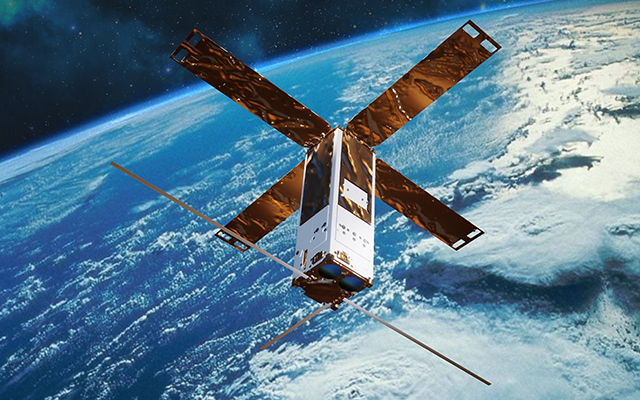
The general idea of the SatGuard system is to monitor the telemetry generated by the systems as a big-data resource and isolate anomalies and events experienced by the operators. By understanding the causes and effects of these anomalies, the team could predict future problems and recommend solutions to them before they occur or extend the operational use of such systems until they can be serviced or reach the end of their life.
Health and Usage Monitoring (HUMS) has been used for many years to produce condition-based management on mechanical systems, performing data analysis on small data segments. The new predictive maintenance capability developed at IAI can be employed on any system fitted with sensors and data sources that provide raw information from the system’s backbone.
IAI’s predictive analysis team performed these analyses as part of a ‘proof of concept’ (POC), applying Artificial Intelligence and Machine Learning to small series of data acquired during development. This phase proves data monitoring can provide meaningful information and realistic predictions when the monitoring processes the entire database of information obtained through development, manufacturing, tests, and operational use. The system can also monitor procedures spanning a short but complex sequence, such as firing a missile. AI can find links, patterns, and trends, predict occurrences and repeat events that may not lead to a critical failure but provide valuable predictive information.
The first application of the new capability was monitoring one of IAI’s satellite programs. The team was called in to assess the performance of a satellite that encountered a series of unexplained anomalies in orbit. Two groups were called to understand this mishap’s root causes. One team took the conventional system analysis approach, while the AI team inspected it as a ‘black box’ and focused only on the system’s data through its lifespan. Such a ‘black box’ considers factors that may not be deemed necessary to the system design, such as the orbit, radiation, solar bursts, and other effects that influence the operating conditions.
Both teams concluded that the cause was circumstantial, but the AI analysis came with recommendations that postponed the reoccurrence of the issues. The next step led to implementing the satellite manufacturing and assembly line system, where predictive analysis contributes to risk reduction assets. The system is currently being embedded at the satellite assembly and integration, monitoring the satellite performance through testing in the vacuum chamber. With that data, it will predict the satellite’s operation in space. In the future, the system will also monitor satellites in orbit to predict and plan services to optimize their mission. Other implementations include monitoring engines and the behavior of other complex processes.
Although the system relies heavily on data automation and AI, human interpretation and leadership are paramount in tailoring the procedures to obtain new information and interpret and understand the data in each use case. The team currently works exclusively within IAI, but it intends to offer these capabilities as a service to customers outside the company.